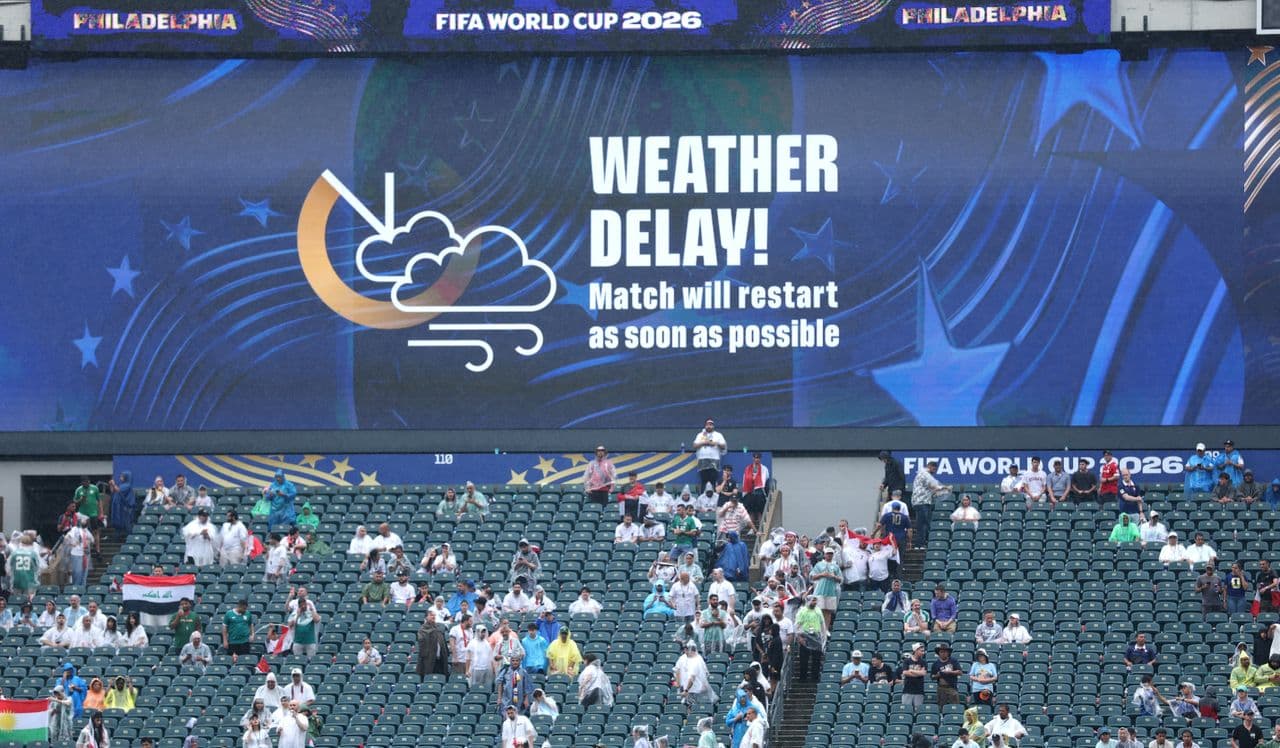
Weather Delays in World Cup Group Stage: What Happens When the Games Stop?
Key points
- ▪Simultaneous kickoffs prevent teams from gaining an unfair advantage.
- ▪Weather delays can force FIFA to reschedule or stagger remaining matches.
- ▪Unfair scenarios could arise if one game is delayed and other results are known.
The final round of World Cup group games is a tense, synchronized affair. Every team in a group kicks off at precisely the same moment, a rule designed to ensure no side benefits from knowing another result before playing. But what happens when Mother Nature throws a curveball? A thunderstorm, fog, or extreme heat can stop a game dead — and with group standings on the line, the consequences could be chaotic.
The Logic Behind Simultaneous Kickoffs
The principle is simple: fairness. If matches in the same group are staggered, teams in a later game could see the score from an earlier match and adjust their approach — perhaps settling for a draw that eliminates a rival. By having all fixtures start together, FIFA ensures every side competes in blind conditions, preserving the integrity of the group stage. That's why the last round is sacred, and any delay throws this delicate balance into disarray.
When Mother Nature Intervenes
Weather delays in football are rare but not unheard of. During the 2014 World Cup in Brazil, for instance, extreme humidity and storms caused minor suspensions. But a significant delay — say, an hour-long downpour that stops one game while the other match in the group continues — creates a nightmare scenario. If the uninterrupted game finishes and the delayed one resumes later, teams in the postponed fixture would know exactly what they need: a win, draw, or certain goal margin. That would effectively nullify the simultaneous kickoff rule.
FIFA's contingency plans are vague, but the most likely outcome is that the delayed game is rescheduled to the next available slot, possibly the following day. In some cases, officials might even push back all matches in the group to maintain synchrony, though that's logistically tough with broadcast schedules and stadium availability. If a match cannot be completed, FIFA could revert to a points-per-game average or — in extreme cases — a play-off, though that's highly speculative.
What It Means for the Teams and Fans
For players, a sudden delay can break momentum and concentration. For fans in the stadium, it's a waiting game. But the real drama is for the group's dynamic. Imagine a team needing a specific goal difference to advance, and the other game already ended 3–0. That team could exploit the situation, leading to accusations of unfair play. FIFA would face immense pressure to keep the spirit of the rules alive, potentially by abandoning the delayed match and using standings from earlier games — though that would be a drastic last resort.
Looking ahead, the 2026 World Cup — with its larger 48-team format and 16 groups of three — will introduce even more complexity. The final round in a three-team group already lacks the same kickoff time rule, but weather delays could still upend qualification. As climate change increases the frequency of extreme weather, football's governing body may need to write clearer protocols. For now, fans should hope the skies stay clear on matchday — because a rain delay in the group stage could rewrite the entire tournament.
More from OffsidePost
Arsenal's champion aura evaporates after Brighton thrashing
Chicago Stars vs Washington Spirit: How to Watch NWSL Clash on TV and Live Stream
Sevilla vs Barcelona: LaLiga Preview, Team News and Live Stream Details
Arsenal's WSL title drought will only end when the goals start flowing
Sandro Mazzola, Inter and Italy icon, dies aged 83
San Lorenzo vs Boca Juniors: How to Watch Argentine Giants Clash