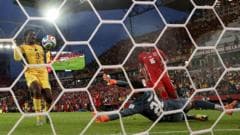
Late Show: Why 2026 World Cup Goals Keep Coming in Stoppage Time
Key points
- ▪Stoppage time has increased significantly.
- ▪Five-sub rules allow fresh legs late on.
- ▪Hydration breaks add minutes and disrupt rhythm.
If you’ve been watching the 2026 FIFA World Cup, you’ve noticed it: the goals are coming later than ever. From the group stage to the knockout rounds, the decisive moments are increasingly arriving in the final minutes of regulation or deep into stoppage time. This isn’t a coincidence. A combination of rule changes, tactical evolution, and match conditions is creating a perfect storm for late drama.
The new normal: longer stoppage time
The most obvious factor is the dramatic increase in stoppage time. Following the lead of the 2022 World Cup in Qatar, FIFA has instructed referees to more accurately account for every delay — especially those caused by substitutions, injuries, and goal celebrations. The result? Matches routinely see 10, 12, even 15 minutes of added time. That’s an extra mini-season of football, and tired legs are more prone to errors and lapses in concentration.
Substitutions as a weapon
Another structural change is the ability to make five substitutions per match, a rule that became permanent after its successful trial. When a team brings on two or three fresh attackers in the 75th minute, it’s like launching a second wave against a defence that has been running for over an hour. Coaches are increasingly treating these changes as tactical levers, sacrificing early control for a late punch. The effect is especially pronounced in high-stakes knockout fixtures, where the margin for error is razor-thin.
Hydration breaks and the physics of fatigue
Then there’s the weather. In many host cities of the 2026 tournament, temperatures and humidity levels demand mandatory hydration breaks during each half. These pauses stop the clock and reset the rhythm of the game. But they also give managers a chance to deliver instructions, break the opponent’s momentum, and send their players back out with renewed focus. The net effect is a match that often feels like it has two distinct phases: first-half football, then a second-half that crescendos into a frantic finale.
What it means for teams and fans
This late-goal trend is more than a statistical curiosity — it’s changing how teams approach their lineups and game plans. Managers now prioritise squad depth over starting eleven quality, knowing that substitutes will play a decisive role. For fans, it means a more chaotic and unpredictable product. And for broadcasters, it’s a godsend: the most exciting moments are happening when viewers are still locked in. The 2026 World Cup is proving that football’s final whistle is no longer the end — it’s often just the beginning of the real action.
More from OffsidePost
Arsenal's champion aura evaporates after Brighton thrashing
Chicago Stars vs Washington Spirit: How to Watch NWSL Clash on TV and Live Stream
Sevilla vs Barcelona: LaLiga Preview, Team News and Live Stream Details
Arsenal's WSL title drought will only end when the goals start flowing
Sandro Mazzola, Inter and Italy icon, dies aged 83
San Lorenzo vs Boca Juniors: How to Watch Argentine Giants Clash